Aristolochic acid
 | |
 | |
| Names | |
|---|---|
| Preferred IUPAC name
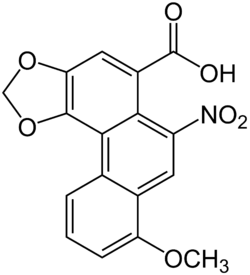
8-Methoxy-6-nitro-2H-phenanthro[3,4-d][1,3]dioxole-5-carboxylic acid | |
| Other names
Aristinic acid; Aristolochia yellow; Aristolochic acid A; Aristolochin;Aristolochine; Descresept; Tardolyt;TR 1736
| |
| Identifiers | |
CAS Number
|
|
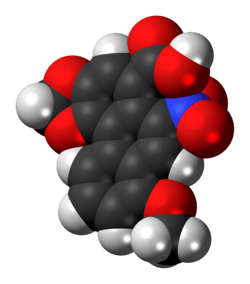
3D model (JSmol)
|
|
| ChEMBL | |
| ChemSpider | |
| KEGG | |
PubChem CID
|
|
| UNII | |
InChI
| |
SMILES
| |
| Properties | |
Chemical formula
|
C17H11NO7 |
| Molar mass | 341.275 g·mol−1 |
| Appearance | yellow powder |
| Melting point | 260 to 265 °C (500 to 509 °F; 533 to 538 K) |
| Solubility | Slightly soluble in most solvents. |
| Hazards | |
| Occupational safety and health (OHS/OSH): | |
Main hazards
|
carcinogenic |
| NFPA 704 (fire diamond) | 
2
1
0 |
Except where otherwise noted, data are given for materials in their standard state (at 25 °C [77 °F], 100 kPa).
Infobox references
| |


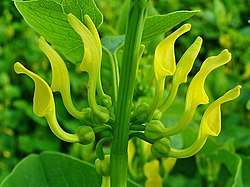
Aristolochic acids (English: /əˌrɪstəˈloʊkɪk/) are a family of carcinogenic, mutagenic, and nephrotoxic phytochemicals commonly found in the flowering plant family Aristolochiaceae (birthworts). Aristolochic acid (AA) I is the most abundant one.[1] The family Aristolochiaceae includes the genera Aristolochia (birthwort) and Asarum (wild ginger), which are both commonly used in Chinese herbal medicine.[2][3] Despite the host plants having a long history of use in traditional medicine, modern clinical research suggests aristolochic acids cause kidney and liver cancer. The FDA has issued warnings regarding consumption of AA-containing supplements.
History
Early medical uses
Birthwort plants, and the aristolochic acids they contain, were quite common in ancient Greek and Roman medical texts, well-established as an herb there by the fifth century BC.[4] Birthworts appeared in Ayurvedic texts by 400 AD, and in Chinese texts later in the fifth century. In these ancient times, it was used to treat kidney and urinary problems, as well as gout, snakebites, and a variety of other ailments. It was also considered to be an effective contraceptive. In many of these cases, birthworts were just some of the many ingredients used to create ointments or salves. In the early first century, in Roman texts, Aristolochia is first mentioned as a component of oral medicines that were used to treat things such as asthma, hiccups, muscle spasms and pains, and to assist in the expulsion of afterbirth.[4]
Discovery of toxicity
Kidney damage
Aristolochic acid poisoning was first diagnosed in the early 1990s at a clinic in Brussels, Belgium, when cases of nephritis leading to rapid kidney failure were seen in a group of women who had all taken the same weight-loss supplement, Aristolochia fangchi, which contained aristolochic acid.[5] This nephritis was termed “Chinese herbs nephropathy” (CHN) due to the origin of the weight-loss supplement.[6] A similar condition previously known as Balkan endemic nephropathy (BEN), first characterized in the 1950s in southeastern Europe, was later discovered to be also the result of aristolochic acid (AA) consumption. BEN is more slowly progressive than the nephritis that is seen in CHN, but is likely caused by low-level AA exposure, possibly from contamination of wheat flour seeds by a plant of the birthwort family, Aristolochia clematitis.[7] CHN and BEN fall under the umbrella of what is now known as aristolochic acid nephropathy.[6]
Liver cancer
A study reported in the Science Translational Medicine journal in October 2017 reported high incidents of liver cancer in Asia, particularly Taiwan, which bore the "well-defined mutational signature" of aristolochic acids. The same link was found in Vietnam and other South-east Asian countries. This was compared with much lower rates found in Europe and North America.[8]
Biosynthesis
The major components of the "aristolochic acid" mixture are aristolochic acid I (AA-I, 12) and aristolochic acid II (AA-II). AA-I biosynthesis begins with tyrosine (2), and proceeds via norlaudanosoline (6, a hydrogenated benzylisoquinoline) and the aporphine alkaloid stephanine (11):
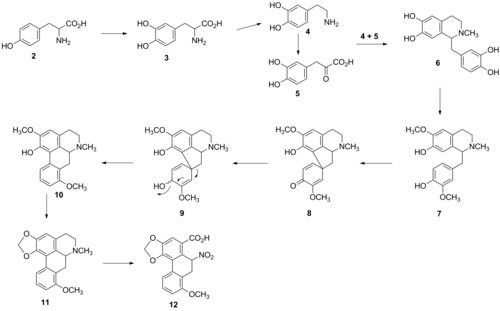
This pathway is hardly surprising: the combination of an aryl carboxylic acid and an aryl nitro functionality (uncommon in natural products) suggests an apparent biogenetic relationship to the aporphines.[9]
Proof, of course, comes from isotopic labeling studies. Feeding Aristolochia sipho (±)‑[3‑14C, 15N]-tyrosine, and isolating and degrading the resulting doubly-labeled AA-I evidences that the nitro group of AA-I originates from the amino group of tyrosine.[10] Previous studies had already demonstrated that tyrosine is metabolized to norlaudanosoline, as follows.[10] Tyrosine is metabolized to L-DOPA (3), and thence dopamine (4) and 3,4-dihydroxyphenylacetaldehyde (DOPAL, not shown — the decarboxylation product of 5). Norlaudanosoline synthetase then catalyzes a Pictet-Spengler-like condensation between dopamine and DOPAL.[11][12]
Feeding A. sipho (±)‑[4‑14C]-norlaudanosoline forms 14C-labeled AA-I, and indeed the carbon atom at ring position C4 of norlaudanosoline is incorporated exclusively in the carboxylic acid moiety of AA-I. No labeled AA-I forms in the analogous experiment with [4‑14C]-tetrahydropapaverine; thus biosynthesis of AA-I from norlaudanosoline must require a phenol oxidation to aporphine intermediates.[13]
Confirmation of aporphine intermediates was obtained some two decades later through a series of feeding studies on Aristolochia bracteata using several labeled, hypothetical, benzyltetrahydroisoquinoline and aporphine precursors.[14] (±)‑[aryl‑3H]‑Prestephanine (10) and (±)‑[aryl‑3H]‑stephanine (11) are incorporated into AA-I, suggesting that they are AA-I's immediate precursors.[14] The transformation of stephanine to AA-I involves an uncommon oxidative cleavage of the B ring of the aporphine structure to give the nitro-substituted phenanthrenoic acid.
The intermediate transformation from norlaudanosine (6) to prestephanine (10) is not entirely clear, and a potential role for the cytochrome P450 enzyme CYP80G2 has been suggested, as CYP80G2 catalyzes the intramolecular C-C phenol coupling of several benzyltetrahydroisoquinolines.[15] Certainly, feeding A. bracteata (±)‑[5′,8‑3H2; 6-methoxy‑14C]-nororientaline generates doubly labeled AA-I; and cleavage of the AA-I methylenedioxy group demonstrates that it arose from the o‑methoxyphenol segment of the nororientaline tetrahydroisoquinoline ring. (±)‑[5′,8‑3H2]‑Orientaline (7) is also incorporated into AA-I, and metabolism of orientaline to prestephanine is known to occur via the proaporphines orientalinone (8) and orientalinol (9) in a Zincke-Suhl-like addition.[16]
Symptoms and diagnosis
Exposure to aristolochic acid is associated with a high incidence of uroepithelial tumorigenesis,[17] and is linked to urothelial cancer.[18][19] Since aristolochic acid is a mutagen, it does damage over time. Patients are often first diagnosed with aristolochic acid nephropathy (AAN), which is a rapidly progressive nephropathy and puts them at risk for renal failure and urothelial cancer. However, urothelial cancer is only observed long after consumption. One study estimated, on average, detectable cancer develops ten years from the start of daily aristolochic acid consumption.[6]
A patient thought to have AAN can be confirmed through phytochemical analysis of plant products consumed and detection of aristolactam DNA adducts in the renal cells. (Aristolochic acid is metabolised into aristolactam.) Additionally, mutated proteins in renal cancers as a result of transversion of A:T pairings to T:A are characteristically seen in aristolochic acid-induced mutations. In some cases, early detection resulting in cessation of aristolochia-product consumption can lead to reverse of the kidney damage.[7][20]
Pharmacology
Absorption, distribution, metabolism, and excretion
Once orally ingested, aristolochic acid I is absorbed through the gastrointestinal tract into the blood stream.[7] It is distributed throughout the body via the blood stream.[7]
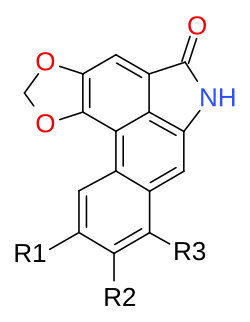
Aristolochic acids are metabolized by oxidation and reduction pathways, or phase I metabolism. Reduction of aristolochic acid I produces aristolactam I[21] which has been observed in the urine. Further processing of aristolactam I by O-demethylation results in aristolactam Ia, the primary metabolite.[7][22] Additionally, nitroreduction results in an N-acylnitrenium ion, which can form DNA-base adducts, thus giving aristolochic acid I its mutagenic properties.[6][7][22]
Aristolactam I adducts that are bound to DNA are extremely stable; they have been detected in patient biopsy samples taken 20 years after exposure to plants containing aristolochic acid.[23]
Excretion of aristolochic acids and their metabolites is through the urine.[7]
Mechanism of action
The exact mechanism of action of aristolochic acid is not known, especially in regards to nephropathy. The carcinogenic effects of aristolochic acids are thought to be a result of mutation of the tumor suppressor gene TP53, which seems to be unique to aristolochic acid-associated carcinogenesis.[20] Nephropathy caused by aristolochic acid consumption is not mechanistically understood, but DNA adducts characteristic of aristolochic acid-induced mutations are found in the kidneys of AAN patients, indicating these might play a role.[20]
Regulation
In April 2001, the Food and Drug Administration issued a consumer health alert warning against consuming botanical products, sold as "traditional medicines" or as ingredients in dietary supplements, containing aristolochic acid.[24] The agency warned that consumption of aristolochic acid-containing products was associated with "permanent kidney damage, sometimes resulting in kidney failure that has required kidney dialysis or kidney transplantation. In addition, some patients have developed certain types of cancers, most often occurring in the urinary tract."[24]
In August 2013, two studies identified an aristolochic acid mutational signature in upper urinary tract cancer patients from Taiwan.[25][26] The carcinogenic effect is the most potent found thus far, exceeding the amount of mutations in smoking-induced lung cancer and UV-exposed melanoma. Exposure to aristolochic acid may also cause certain types of liver cancer.[25]
See also
- List of herbs with known adverse effects
- Piperolactam A
- Stephania tetrandra
References
- ^ Wu, Tian-Shung; et al. (2005). "Chemical constituents and pharmacology of Aristolochia species". In Rahman, Atta-ur (ed.). Studies in Natural Products Chemistry: Bioactive Natural Products (Part L). Gulf Professional Publishing. p. 863. ISBN 978-0-444-52171-2.
- ^ Heinrich M, Chan J, Wanke S, Neinhuis C, Simmonds MS (August 2009). "Local uses of Aristolochia species and content of nephrotoxic aristolochic acid 1 and 2--a global assessment based on bibliographic sources". J Ethnopharmacol. 125 (1): 108–44. doi:10.1016/j.jep.2009.05.028. PMID 19505558.
- ^ Nolin, Thomas D. & Himmelfarb, Jonathan (2010). "Mechanisms of drug-induced nephrotoxicity". In Uetrecht, Jack (ed.). Adverse Drug Reactions. Springer. p. 123. ISBN 978-3-642-00662-3.
- ^ a b Scarborough, John (2011). "Ancient Medicinal Use of Aristolochia: Birthwort's Tradition and Toxicity". Pharmacy in History. 53 (1): 3–21. PMID 22702021. Retrieved 3 May 2015.
- ^ Vanherweghem, Jean-Louis (April 1998). "Misuse of Herbal Remedies: The Case of an Outbreak of Terminal Renal Failure in Belgium (Chinese Herbs Nephropathy)". The Journal of Alternative and Complementary Medicine. 4 (1): 9–13. doi:10.1089/acm.1998.4.1-9. ISSN 1075-5535. PMID 9553830.
- ^ a b c d Arlt, Volker; Stiborova, Marie; Schmeiser, Heinz (2002). "Aristolochic acid as a probable human cancer hazard in herbal remedies: a review". Mutagenesis. 17 (4): 265–277. doi:10.1093/mutage/17.4.265. PMID 12110620.
- ^ a b c d e f g Lunn, Ruth; Jameson, C.W.; Jahnke, Gloria (2 Sep 2008). "Report on Carcinogens Background Document for Aristolochic Acids" (PDF). National Toxicology Program. Retrieved 3 May 2015.
- ^ "Across Asia, liver cancer is linked to herbal remedies – study". Hong Kong Free Press. 19 October 2017. Retrieved 20 October 2017.
- ^ Spenser, I. D.; Tiwari, H. P. (1966). "Biosynthesis of Aristolochic Acid". Chemical Communications (2). Royal Society of Chemistry: 55–56. doi:10.1039/c19660000055.
- ^ a b Comer, F.; Tiwari, H.P.; Spenser, I.D. (1969), "Biosynthesis of aristolochic acid", Canadian Journal of Chemistry, 47 (3): 481–487, doi:10.1139/v69-070
- ^ Rueffer, Martina; El-Shagi, Hannemarie; Nagakura, Naotaka; Zenk, Meinhart H. (1981). "(S)-Norlaudanosoline synthase: The first enzyme in the benzylisoquinoline biosynthetic pathway". FEBS Letters. 129 (1): 5–9. Bibcode:1981FEBSL.129....5R. doi:10.1016/0014-5793(81)80742-9. S2CID 13456773.
- ^ Hoover, Larry K.; Moo-young, Murray; Legge, Raymond L. (1991), "Biotransformation of Dopamine to Norlaudanosoline by Aspergillus niger", Biotechnology and Bioengineering, 38 (9): 1029–1033, Bibcode:1991BiotB..38.1029H, doi:10.1002/bit.260380911, PMID 18600867, S2CID 27365169
- ^ Schutte, H. R.; Orban, U.; Mothes, K. (1967). "Biosynthesis of Aristolochic Acid". European Journal of Biochemistry. 1 (1): 70–72. doi:10.1111/j.1432-1033.1967.tb00045.x. PMID 6059349.
- ^ a b Sharma, Vidur; Jain, Sudha; Bhakuni, Dewan S.; Kapil, Randhir S. (1982), "Biosynthesis of aristolochic acid", Journal of the Chemical Society, Perkin Transactions 1, 1: 1153–1155, doi:10.1039/p19820001153
- ^ Ikezawa, Nobuhiro; Iwasa, Kinuko; Sato, Fumihiko (2008). "Molecular Cloning and Characterization of CYP80G2, a Cytochrome P450 That Catalyzes an Intramolecular C-C Phenol Coupling of (S)-Reticuline in Magnoflorine Biosynthesis, from Cultured Coptis japonica Cells". Journal of Biological Chemistry. 283 (14): 8810–8821. Bibcode:2008JBiCh.283.8810I. doi:10.1074/jbc.M705082200. PMID 18230623.
- ^ Battersby, A. R.; Brown, R. T.; Clements, J. H.; Iverach, G. (1965). "On the Biosynthesis of Isothebaine". Chemical Communications (11). Royal Society of Chemistry: 230–232. doi:10.1039/c19650000230.
- ^ Ronco, Claudio; et al., eds. (2008). Critical care nephrology. Elsevier Health Sciences. p. 1699. ISBN 978-1-4160-4252-5.
- ^ Chen CH, Dickman KG, Moriya M, Zavadil J, Sidorenko VS, Edwards KL, Gnatenko DV, Wu L, Turesky RJ, Wu XR, Pu YS, Grollman AP (May 2012). "Aristolochic acid-associated urothelial cancer in Taiwan". Proc. Natl. Acad. Sci. U.S.A. 109 (21): 8241–6. doi:10.1073/pnas.1119920109. PMC 3361449. PMID 22493262.
- ^ Lai, M.-N.; Wang, S.-M.; Chen, P.-C.; Chen, Y.-Y.; Wang, J.-D. (2009). "Population-Based Case-Control Study of Chinese Herbal Products Containing Aristolochic Acid and Urinary Tract Cancer Risk". JNCI Journal of the National Cancer Institute. 102 (3): 179–186. doi:10.1093/jnci/djp467. PMC 2815723. PMID 20026811.
- ^ a b c Go¨kmen, M. Refik; Cosyns, Jean-Pierre; Arlt, Volker M.; Stiborova, Marie; Phillips, David H.; Schmeiser, Heinz H.; Simmonds, Monique S.J.; Cook, Terence; Vanherweghem, Jean-Louis; Nortier, Joe¨lle L.; Lord, Graham M. (2013). "The Epidemiology, Diagnosis, and Management of Aristolochic Acid Nephropathy: A Narrative Review" (PDF). Annals of Internal Medicine. 158 (6): 469–477. doi:10.7326/0003-4819-158-6-201303190-00006. hdl:2013/ULB-DIPOT:oai:dipot.ulb.ac.be:2013/176399. PMID 23552405. S2CID 8007069. Retrieved 3 May 2015.
- ^ Michl, Johanna; Ingrouille, Martin J.; Simmonds, Monique S. J.; Heinrich, Michael (2014). "Naturally occurring aristolochic acid analogues and their toxicities". Natural Product Reports. 31 (5): 676–93. doi:10.1039/c3np70114j. PMID 24691743.
- ^ a b "Plants Containing Aristolochic Acid" (PDF). IARC Monographs-100A: 347–361. Retrieved 3 May 2015.
- ^ Schmeiser; Nortier; Singh; da Costa; Sennesaei; Cassuto-Viguier; Ambrosetti; Rorive; Pozdzik; Phillips; Stiborova; Arlt (2014). "Exceptionally long-term persistence of DNA adducts formed by carcinogenic aristolochic acid I in renal tissue from patients with aristolochic acid nephropathy". International Journal of Cancer. 135 (2): 502–507. doi:10.1002/ijc.28681. PMID 24921086. S2CID 28784835.
- ^ a b FDA Warns Consumers to Discontinue Use of Botanical Products that Contain Aristolochic acid. April 11, 2001.
- ^ a b Poon, S. L.; Pang, S.-T.; McPherson, J. R.; Yu, W.; Huang, K. K.; Guan, P.; Weng, W.-H.; Siew, E. Y.; Liu, Y. (2013). "Genome-Wide Mutational Signatures of Aristolochic Acid and Its Application as a Screening Tool". Science Translational Medicine. 5 (197): 197ra101. doi:10.1126/scitranslmed.3006086. PMID 23926199. S2CID 25923013.
- ^ Hoang, M. L.; Chen, C.-H.; Sidorenko, V. S.; He, J.; Dickman, K. G.; Yun, B. H.; Moriya, M.; Niknafs, N.; Douville, C. (2013). "Mutational Signature of Aristolochic Acid Exposure as Revealed by Whole-Exome Sequencing". Science Translational Medicine. 5 (197): 197ra102. doi:10.1126/scitranslmed.3006200. PMC 3973132. PMID 23926200.
Further reading
- Aronson, J.K. (2008). "Aristolochicae". Meyler's side effects of herbal medicines. Elsevier. p. 55. ISBN 978-0-444-53269-5.
- Mills, Simon & Bone, Kerry (2005). "Aristolochic Acid Nephropathy". The essential guide to herbal safety. Elsevier Health Sciences. p. 15. ISBN 978-0-443-07171-3.
- Poon, Wing-Tat; Lai, Chi-Kong; Yan-Wo Chan, Albert (2007). "Aristolochic Acid Nephropathy: The Hong Kong Perspective". Hong Kong Journal of Nephrology. 9 (1): 7–14. doi:10.1016/s1561-5413(07)60003-9.
External links

- Complete list of warnings from the US Food and Drug Administration
- FDA Concerned About Botanical Products, Including Dietary Supplements, Containing Aristolochic Acid May 2000.
- Plants Containing Aristolochic Acid Archived 2014-08-12 at the Wayback Machine
- Herbal medicines causing kidney failure, bladder cancer in India, Times of India, Mar 19, 2013